Ranking Every RUSH Album 🎸🥁🎹
I started listening to the Canadian power trio Rush when I was in middle school, around 1996 or 1997. This marked the biggest shift in my development as a musician; it was around this time that I started consuming progressive music en masse, from the old classic albums of Genesis and Yes to the newer, crazier prog-metal offerings from Dream Theater and Symphony X. This turned out not to be a phase, but a revelation of a fundamental aspect of my appreciation of music, the sine quā nōn of my aural attention - technical proficiency. Once I discovered bands in which everyone could really play, I instantly and permanently had less patience for bands who couldn’t.
And everybody in Rush could play. I don’t think Rush is the sort of band that you gradually warm up to - you either get it on first listen or you don’t. When I heard what they were doing tonally, compositionally, technically on songs like “2112” and “Freewill”, I was astonished. “Why isn’t all music like this?” I wondered, and then spent the next several years (decades?) discovering more music that was like that.
Part of that discovery, however, was that quite a lot of Rush’s music is decidedly not like that. In fact, despite my now 20+ years as a Rush fanatic, I only regularly listen to about eight of their 19 studio albums. The most recently released of those I enjoy is Signals, which came out on September 9th, 1982 - five days before I was born. This means that Rush hasn’t released an album that I like at any point in my lifetime.

Honestly they’re more like aliens trying to pass as humans, and nobody wanted to tell them that the illusion was never quite complete.
This may seem a little strange - a Rush obsessive who dislikes more than half of their catalogue - but I can explain. Like any artist who makes music for nearly 40 years, Rush evolved significantly over their career, working with different producers, incorporating new sounds and styles, and experimenting with incipient technologies. In the 1970’s, they were making raucous guitar prog-rock, wearing kimonos on stage and singing 20-minute epics about distant galaxies and whimsical forest creatures. In the 1980’s, they got bad haircuts, rolled up the sleeves on big-collar sport coats, and threw their guitars in the garbage. (These were bad ideas, in my opinion.) By the mid-90’s they had retrieved their instruments from the landfill and started playing honest-to-goodness hard rock. To be sure, there are people who adore Rush in all of their various moods. Some of those people are close friends of mine. I envy them, for I am not like them.
Why did I decide to do this?
Well, besides just being an excuse to listen to hours of my favorite music and then write about it, it was actually a chance encounter with another Rush fan that inspired this exercise. I was wearing my classic Starman t-shirt when my partner’s niece’s boyfriend (yes, this is a real person - hi Michael 👋) asked if I was actually a Rush fan and not just wearing the shirt because I was in Canada at the time. (In fairness, I do do that sort of thing when I’m in Canada - including insisting on paying for everything in loonies and twonies.) I said no, actual Rush fan here. Inevitable clarifying follow-up question - what’s your favorite album? I can never decide between 2112 and Hemispheres, so I offer both. He counters with Roll The Bones. I thought he was kidding. He was not kidding.
I gave him quite a spirited ribbing about this (and will continue to do so) because, surely nobody’s favorite Rush album is Roll The Bones. Surely. But then I remember that there are people who profess to like the Star Wars prequels, and they can’t all be lying about it, so maybe there really are people who love the Rush that I like least. Perhaps I’ve missed something? What if I’ve forfeited twenty years of musical enjoyment just because I decided when I was 15 that Presto sucked? And Hold Your Fire? And Roll The Bones? And Power Windows? And Grace Under Pressure?
My biases and the methodology
So I decided that I’d go back and listen to the whole damned catalogue and see what’s what. As I’ve already mentioned, I’ve been shunning most of Rush’s work since I was a teenager, listening exclusively to the stuff that I fell in love with when I discovered the band. Yes, when Vapor Trails and Snakes & Arrows came out I bought them on CD and listened to them quite a bit, but those albums didn’t survive into the MP3 era for me. (It turns out that Vapor Trails was remixed and re-released in 2013; I was completely unaware of this until about a week ago.) That still leaves at least seven albums that I’m quite unfamiliar with, so there’s room for this to be an interesting exercise.
I’ve always thought that Rush’s discography ranged from soaring heights of genius to profound depths of folly, passing through various levels of forgettable mediocrity along the way. In my opinion, Rush’s 38 years of recorded studio material can be divided into fairly distinct eras, even if the occasional transitional album defies categorization. I would parse their oeuvre like this:
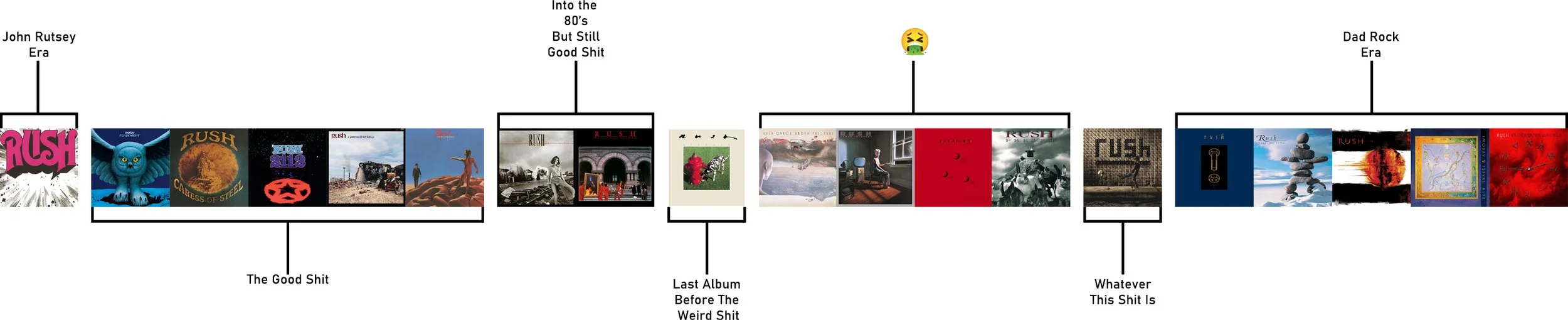
As you can see, I’m much kinder to the band in certain eras than others. In order to muster some measure of objectivity, I decided to approach this retrospective in much the same way I did when I rated every season of The Simpsons back on my old blog. Rather than listen to each album one at a time, I made a playlist of every Rush song from every studio album and then arranged it alphabetically by song title, thus completely randomizing the list with respect to album. Then I hid the album column so I wouldn’t know my Roll The Boneses from my Prestos. (This works because I generally don’t know which songs appear on the albums I haven’t been listening to. That statement sounds obvious now that I write it.) I gave each song a rating from 1 to 10 (except for two tracks that got a Spinal Tap “11”) and kept track of my thoughts on an Excel spreadsheet. Then I rearranged the sheet by album and averaged the scores for each. The list below therefore represents the average strength of the songs on each album.
I can think of at least two potential objections to this approach. One is that the number of tracks per album varies quite a lot - from as few as five to as many as 13 - which can cause inconsistencies in the impact of particularly good or bad songs. I don’t think this ultimately skews the data in appreciable ways, but it may cause one or two albums to be a spot higher or lower than they “belong”. The second is the completely fair objection that many of these albums were composed as cohesive units meant to be consumed all at once, not separated and intermixed with others. I don’t doubt that I would produce a different list if I listened to each album on its own, but I also think I’d struggle to put the albums into a specific order without a way to quantify my enjoyment of them, even if imperfectly. Having completed the whole project now and seen the results, I’d say this approach works fine for what I was trying to accomplish. (And, in case it needs to be said, this is all just, like, my opinion, man…)
So, was I right to have ignored the band’s entire output after 1982? Let’s find out! From worst to best, here’s how all 19 of Rush’s studio albums go:
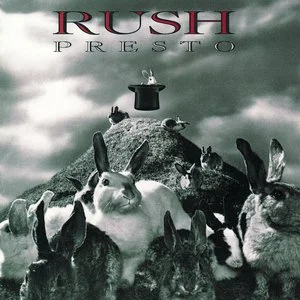
#19 - Presto 🐇 (4.27/10)
Highlights: “Show Don’t Tell”, “The Pass”
Lowlights: “Available Light”, “Scars”
Taking the award (and by some margin) for my least favorite Rush album is 1989’s Presto. (At least Roll The Bones can proudly wave the “Not Last Place” trophy!) To be honest, I’m having a little bit of trouble squaring Geddy Lee’s comments about the album with my own notes. “We wanted to stay away from keyboards for this album,” he says about Presto. “They can be quite a passive writing tool, and we wanted something more forceful and less pastoral. I wrote a lot more on bass, which reminded me of the old days when there was nothing more to write on.” … “This album was a real reaction against technology in a sense. I was getting sick and tired of working with computers and synthesizers.” … “We made a pact to stay away from strings, pianos and organs, to stay away from digital technology.”
By contrast, here are some of the comments I wrote when listening to the songs on this album:
“Keyboards are cringey in the pre-chorus” (“Anagram”)
“Piano chords? … I hate this song” (“Available Light”)
“This is just 4/4 simple chord stuff with keyboards and blah blah blah…” (“Red Tide”)
“Bridge is stupid synth silliness and there’s still 2 minutes left…” (“Superconductor”)
Oh, wait - Geddy kept talking after those previous comments… “In the end, we couldn't resist using [keyboards and synthesizers] for colour.”
Ah.
Here are some more insights from my notes: “Verse is a failed arena-rock riff” (“Anagram”); “The mix is trebly trash nonsense, Geddy’s bass sounds awful, the chorus is awful” (“Chain Lightning”); “Aggressively 4/4 guitar-rock of the sort that I’d really rather not ever hear again” (“War Paint”).
#18 - Roll The Bones 🎲 (4.7/10)
Highlights: “Dreamline”
Lowlights: The rest of the album
I am shocked - shocked! - that Roll The Bones didn’t come in dead last. I’ll give credit where it’s due - apparently it averages out to be a bit better than Presto. Also this album was certified Platinum in the US in 2001. Can a million people be wrong? Of course they can. Oh, where to start with this? Even among my Rush-loving friends in high school, this album was a punchline. Ok, yes, the lion’s share of that is borne by the rap section on the title track, which has to be heard to be believed. In an interview after the album was released, (drummer) Neil Peart, intimating that the rap section was actually his idea, said the following:

“I wanted to give it a shot because it seemed like a lot of fun to try. I presented it to the guys, who were a bit skeptical at first, but then we tried it a lot of different ways… We even tried it with a female voice, but the transition was too harsh. We found Geddy's electronically enhanced low-frequency Barry-White-baritone very pleasing to the ear. The great thing about Rush is that there have never been any limitations.”
You know what else didn’t have any limitations? The Star Wars prequels. Silliness of the title track aside, this album has serious problems. The mix in general is just awful; in my comments about various tracks across the album I said things like “bad reverb on the vocals”, “Neil’s snare sounds like a cap gun”, “this is worst-possible Geddy bass tone”, and, “very strong synths overshadowing most of the other instruments”. If I go back to the title track again for a moment, I wrote, “Bad mix! Shockingly so in some places”. About “Dreamline”, the only song I listed above as a (grading on a curve here) highlight, I wrote that, “this should be a banger, but the mix is insipid and robs it of any visceral impact.”
Here’s another unflattering way to think about Roll The Bones - within the broader commercial music context in which it was written, recorded, and released. This album came out in 1991. Here’s a list of just a few other albums that also came out in 1991:
Red Hot Chili Peppers - Blood Sugar Sex Magic
U2 - Achtung Baby
R.E.M - Out Of Time
Metallica - The Black Album
Guns N’ Roses - Use Your Illusion I, II
Nirvana - Nevermind
Pearl Jam - Ten
Primus - Sailing The Seas of Cheese
There was also Michael Jackson’s Dangerous, Mr. Bungle’s debut album, and a slew of popular rap and hip-hop releases from A Tribe Called Quest, Cypress Hill, Naughty By Nature, and LL Cool J. And Rush made this.

#17 - Hold Your Fire 🔥 (4.8/10)
Highlights: “Time Stand Still”, “Turn The Page”
Lowlights: “Tai Shan”, “Second Nature”
While 1987’s Hold Your Fire might feel smugly secure as only the third worst Rush album, it unquestionably holds the ignominious distinction of containing Rush’s worst song, “Tai Shan”. Not even the band disputes this - Geddy said in an interview in 2009, “You're supposed to be crappy when you make your first three or four records. But even in our middle period, we did this song called ‘Tai Shan’, using a poem Neil wrote about climbing a mountain in China, and when I listen to that it's like, Bzzt. Error… We should have known better.”
A lot of the songs from this era of Rush (the 🤮 era, as per above) can be frustrating in that they often contain very small parts or elements that are good. “Lock And Key” is a great example of this - there’s a really great guitar solo with some quality Ged and Neil jamming underneath, and it momentarily hearkens back to the great stuff from the late 70’s/early 80’s. But that part is 30 sections of a song that’s over 5 minutes long, and the rest of it is terrible. In reviewing my comments on various songs of this era, I can see myself struggling to find new ways to say “I just don’t like how this sounds.” Neil was playing on electronic drum kits, Geddy was using his Wal basses (have you ever heard of Wal basses? I haven’t, and I’ve been playing bass for almost 30 years), and Alex was apparently hibernating somewhere in the studio instead of recording guitar tracks. Some of my comments for songs on this album included, “Oh god, the fart bass and Carlton-dance beat”, “piano chords again? … this song belongs as background music on The Weather Channel”, “intro is weird and I hate it”, “annnnnd keyboards everywhere”, and, “the song is repetitive and has intrusive keyboards of various flavors in too many parts.”
#16 - Grace Under Pressure 😩 (5.25/10)
Highlights: “Distant Early Warning”
Lowlights: “Red Sector A”, “The Body Electric”
For this 1984 studio release, the band ditched their long-time producer and friend Terry Brown (who had worked with them on the eight studio albums prior to this one) in favor of someone whose vocabulary apparently did not contain the word “no”. Firmly ensconced in the keyboard/synth era, this album also adds elements of ska and reggae, which my poor ears receive as confusing at best and frightening at worst. My notes for songs on this album often point out that it seems like the band is trying to do something creative, but it invariably comes across as jarring and bizarre in a way that simply doesn’t work for me.

I’m not easily put off by weirdness - I love Primus, Mr. Bungle, Frank Zappa… but I found myself jotting down things like the following:
“What the hell is happening in this song?” and “I can’t tell if the weird circus part is brilliant or stupid (fine line!)” (“Red Lenses”)
“I don’t know what to say about this song except that it’s really weird and I can’t explain or understand it” and “cocaine island jam” (“The Enemy Within”)
“electronic drum and fart bass intro with chorusy guitar strums” and “this is each instrumentalist sounding the worst he has ever sounded and simultaneously” (“The Body Electric”)
“Synth! Synth! Screeching guitar weirdness” (“Between The Wheels”)
Is it too late to give Terry Brown a call?

#15 - Vapor Trails ☀ (5.62/10)
Highlights: “Earthshine”, “Freeze”
Lowlights: The rest of the album
I’m a little bit surprised to see 2002’s Vapor Trails coming in so low on this list - even lower than an album from the 🤮 era! It also pains me to have to dump all over this album, because it was the first one that Rush made after the longest music-making hiatus they ever had in their career. (After the band released Test For Echo in 1996, Neil Peart lost his only daughter to a car accident and his wife to cancer in less than a year, and the band understandably stopped making music.) Vapor Trails is the first album appearing on this list from what I called the “Dad Rock” era in my snarky graphic, so I ought to explain why I’ve characterized those five albums that way.
Just as Rush embraced the style of the times in the 80’s and arranged all of their songs with keyboards and primitive synthesizers, they too shifted along with their peers to more guitar-driven hard rock from the early 90’s. This means that, in one narrow sense at least, their music had more in common with the earliest albums, but that’s about where the similarities end. The era of 20-minute epics and extended solo jams is long gone, not to be resurrected in the slightest even as the keyboards fall away and the songs are written with guitars in-hand. The problem with so much music in the Dad Rock era, in stark contrast to the 🤮 era, is that it’s inoffensive to the point of being forgettable. There’s very little about the music of 90’s-and-forward Rush that is unique. The epic themes and pageantry, the musical overindulgence, the synthesized weirdness - it’s all stripped away now, and replaced with… nothing. Late-stage Rush doesn’t annoy and confuse me like 80’s Rush; it bores me. I know I stipulated some highlights and lowlights in keeping with the schema above, but in truth I rated every single song on this album a 5, 6, or 7 out of 10. They’re all just… fine. And that’s the problem.
#14 - Power Windows 🏠 (5.88/10)
Highlights: “Grand Designs”, “The Big Money”
Lowlights: “Territories”, “Mystic Rhythms” (yeah I don’t like it, go away)
1985’s Power Windows sits firmly within the 🤮 era, a time when the band was purposefully becoming a less progressive rock band and striving for glory in the new wave, and this makes their music much, much less appealing to me. An outside observer might look at the transformation from Hemispheres to Power Windows (1978-85) and say that the band had sold out at some point along the way, given how much more commercially viable and radio-friendly their music became during that period. In reading interviews from the band during those years, though, it’s clear that no external forces were pushing them in the direction of shorter, catchier songs with big synth sounds and relatable contemporary lyrical themes.

Apart from the occasional objection of Alex, who worried that his guitars were being crowded out by the keyboards and gadgets, this was simply the direction the band consciously chose to go, and in that sense at least there’s nothing impure or disreputable about the evolution of their approach to the albums of this era. The music that they chose to make in these years, however, is trash and I hate it. You can just go back and look at the comments I made about the other albums from this era, and they’re all still applicable to the tracks on Power Windows: in general, the songs are extremely synth heavy, Geddy’s bass tone is bad, and the only good parts of any of the songs are the guitar solo sections, which most of them still have but only last for 20-30 seconds. The arrangements at this point are very traditional - intro, verse, chorus, bridge, solo, chorus for four or five minutes. In retrospect, I think we should all be as thankful for grunge killing off new wave as we are for rock n’ roll demolishing disco.

#13 - Test For Echo 🔊 (5.91/10)
Highlights: “Half The World”, “Limbo”, “Resist”
Lowlights: “Dog Years”, “Virtuality”, “Totem”
Released in 1996, Test For Echo was the latest Rush album when I first discovered the band, so I have listened to it quite a bit more than most of the albums that have already appeared on this list. It’s still best described as forgettable Dad Rock-era Rush, but it has the good fortune of “Resist” to elevate it above the previous entries overall. The album has the same heavy, guitar-driven hard rock sound that every subsequent Rush album will come to have, and I think that’s generally a positive thing, at least compared to where the band was coming from after Presto.
One thing that stands out to me about Test For Echo is, perhaps surprisingly, the lyrics. As I mentioned a few thousand words ago in the introduction, my main interest in music is the music - i.e. the notes, not the words. In fact I suspect that quite a lot of the redeeming qualities of these ill-ranked Rush albums are to be found in the songs’ lyrics, which I generally don’t pay attention to. I know this makes me a very atypical consumer of music, but there are songs that I’ve listened to hundreds of times without ever really learning the words. Anyway - I do notice the lyrics on songs like Virtuality, because they’re cringey as all get-out:
Net boy, net girl
Send your impulse ‘round the world
Put your message in a modem
And throw it in the cyber sea
Doesn’t really hold up as the digital age matures, I think. Dog Years and Totem also stick out to me for their unignorable awkwardness. I don’t want to imply that Neil has been particularly derelict in his duties as the band’s chief lyricist for Test For Echo, because it’s also possible that I notice the lyrics because the music on the album is so unnoticeable. Either way, Test For Echo isn’t much more than perfunctory heavy radio-rock. To wit: the band didn’t play a single song from this album in the last decade of their live shows.
#12 - Counterparts 🔩 (6/10)
Highlights: “Animate”, “Cold Fire”, “Stick It Out”
Lowlights: “Everyday Glory”, “Double Agent”
1993’s Counterparts is an album that I was really quite unfamiliar with before this giant re-listening, which is too bad since it’s on the more positive side of Dad-Rock Rush. You’ll recall that I criticized Roll The Bones for being hopelessly out of touch with all of the incredible music that other artists were releasing around it; after touring with Primus and listening to Pearl Jam, Rush finally caught up (a little bit, anyway) with the competition. In reading about the production of this album, I was heartened to learn that (guitarist) Alex had become increasingly allergic to Geddy’s inclinations towards using keyboards and synthesizers, to the point that he was uncomfortable with the equipment even being brought into the recording studio. Geddy put it this way in an interview in 1993:

“[Alex] must have said 10,000 times that he didn't want any keyboards on the album, so when I brought my keyboards into the studio there was an immediate atmosphere. He kept looking at them like they were really threatening. Now we wrote all the last album on bass, guitar and drums and added the keys at the end to embellish. That was the only reason the keys were there - or maybe to help me express myself when I was painted into a musical corner - but Alex was making assumptions that I wanted keyboards all over the place. It was a very volatile situation.”
Three cheers for Alex Lifeson! Why, then, is this album still all the way down in twelfth place? Well, at the end of the day it falls into the Dad-Rock trap of being inoffensive but forgettable. What keeps it ahead of Vapor Trails is that the positive elements of the songs are more prominent and frequent, so I rated more of the tracks towards the 7 side of the 5-6-7/10 range (although the worst song, “Everyday Glory”, sank to a 4/10). Here’s what I wrote in my notes about “Cut To The Chase”, for example:
“The intro and verses driven by Geddy's bass are nice; Rush is great in moments like this when they're a Primus-like power trio; a lot of the other parts of the song are just not very interesting (choruses); great Joe Satriani/Eric Johnson guitar solo! Great riff at 3:18 and forward after the solo; basically it's a pretty good song with a bland chorus.”
A lot of my commentary about this album’s tracks sounded like this - exciting sections unsupported by boring arrangements or parts that just don’t quite go hard enough to be memorable. That’s Dad-Rock Rush, sadly.

#11 - Snakes & Arrows 🐍🏹 (6.23/10)
Highlights: “Bravest Face”, “We Hold On”
Lowlights: “The Larger Bowl”, “Spindrift”
I guess we’re firmly in Dad-Rock era purgatory here, as 2007’s Snakes & Arrows is next on the list, just outside the top-10. This was the band’s penultimate studio release and the last one that I bought on CD when it was came out. (I remember that I was working at a Borders bookstore and wrote a little blurb for it in the “employee recommendation” section.) The album followed a similar trajectory for me during my re-listen, with its 13 songs all generally falling between 5-6-7/10 (and again, a sour 4/10 for “The Larger Bowl”). Seven of the tracks got a 7 out of 10, placing this album higher than the others thus far in the Dad-Rock pantheon (panthropon? to get rid of the ‘god’ bit?). Snakes & Arrows has a bit more sonic variety than many other albums of this era, with some blues influences on “The Way The Wind Blows”, Geddy hopping into a falsetto on a couple different tracks, and the instrumental acoustic number “Hope”.
Speaking of instrumentals, this album has three of them, more than any other Rush album. Two of those three, however, (“Hope” and “Malignant Narcissism”) are only a hair over two minutes long, and the longer one (“The Main Monkey Business”) wasn’t even the one nominated for a Grammy for “Best Instrumental Rock Performance”. I’ve avoided talking about Rush instrumentals on this list so far, but this album is forcing my hand. After “YYZ” on Moving Pictures in 1981, Rush didn’t release an album featuring an instrumental track again until “Where’s My Thing?” on Roll The Bones, a full decade later. They’re rare occurrences thereafter, with “Leave That Thing Alone” and “Limbo” being the only other two that aren’t on Snakes & Arrows. To be honest, there isn’t all that much to say about the instrumental tracks after “YYZ” - they simply don’t go for the musical flexing or indulgent artistry that define “YYZ” and “La Villa Strangiato” (the best instrumental rock song I’ve ever heard), so I’m left wondering why they were written and recorded as instrumentals at all. They sound like the rest of the music on their respective albums but with a conspicuous lack of vocals. I know that there are explanations for the titles of “Malignant Narcissism” and “The Main Monkey Business” that disconfirm this theory, but I feel like after Moving Pictures the band really developed a distaste for musical over-the-toppery, finding it to be a bit of, well, narcissistic monkey business. I think that disinclination alone has done more to alienate me from the band’s work than any of the their other vicissitudes over my lifetime.
#10 - Clockwork Angels 🕘👼 (6.36/10)
Highlights: “Headlong Flight”
Lowlights: “The Garden”, “Halo Effect”
Bow before the champion of the Dad-Rock era - the band’s final studio album, 2012’s Clockwork Angels. By 2012 I was mostly into prog-metal-core acts like Protest The Hero and Periphery, so I didn’t really listen to Clockwork Angels when it came out. Wikipedia informs me that this is the only true concept album in the band’s history, although it admits that they have previously dedicated entire sides of records to songs that tell a cohesive story (like, I don’t know… “2112”, possibly the band’s single greatest musical achievement). Anyway, I’ve read Neil’s entire description of the process of writing and recording this album and still have no idea what the concept is, exactly, so I’ll just leave it at that - it’s a concept album.

Right, but how’s the music on this thing? Eh, it’s mostly pretty ok. Some of the songs feel like the heaviest stuff the band has ever written (parts of “BU2B”, for example), and there are more overtly progressive (read: busy) riffs and solos than one finds on many albums preceding this one. These guys were nigh-on 60 years old when they were recording this thing, and they deserve credit for not taking their foot off the gas and writing ballads - there’s still a lot of energy on this album. “Headlong Flight” got an 8 out of 10 from me, making it my highest-rated Rush song since “Resist” on Test For Echo. Still, the valleys between the peaks are too low to elevate the album higher than this, which is a bummer since it turned out to be their last album (although they weren’t thinking about it that way at the time), and they were by no means phoning it in. They went out on a high note, even if it’s a few semitones lower than Ged’s high notes in the Hemispheres days.

#9 - Rush 🏃♂️💨 (7.25/10)
Highlights: “Before and After”, “Working Man”
Lowlights: “In The Mood”
Yes, you heard me - I like Rush’s debut 1974 album more than their final one. It doesn’t have a sterling reputation among Rush aficionados, and for understandable reasons. No Neil Peart, for one - and his absence is quite noticeable in hindsight, both rhythmically and lyrically. Geddy’s squealing banshee vocals can also be a bit startling or off-putting to the uninitiated. I think that Rush can still be defended, not just as a solid classic rock album, but as a Rush album too. The detractors tend to focus on what Rush is missing - complex rhythms and time signatures, epic lyrical themes, Neil’s virtuosic drumming - rather than notice what’s here: a set of great-sounding, well-played, fun rock n’ roll songs.
Geddy and Alex both have great tone (even though Ged had yet to acquire his signature Rickenbacker 4001), and there’s a guitar solo on nearly every song on the album. And not the 20-second, effects-laded affairs that Alex peppers the 80’s albums with, no - these are proper guitar leads stretching well across the tracks. Some songs, like “Before And After”, have more than one guitar feature; “What You’re Doing” has a solid minute of lead guitar between the 2- and 3-minute marks. Then, of course, there’s “Working Man”, one of the best songs the band ever wrote, as evidenced by the fact that they played it live throughout their entire four-decade-long touring career. I’d put the guitar solo/jam from 2:06 to 5:20 up against anything else you could hear in 1974. Rush is not just a glimpse at what lay ahead for the band; it’s also an incredibly fun, head-nodding classic rock album that is absolutely still worth listening to even in full view of the band’s career.
#8 - Signals 🚥 (7.63/10)
Highlights: Everything but “Countdown” and “Losing It”
Lowlights: “Countdown” and “Losing It”
I’ll admit that I wasn’t always the biggest fan of Rush’s 1982 release Signals. I very much considered it a part of the 🤮 era, or at least a little too close for comfort, so I kept it well outside my regular listening rotation. There’s already an over-reliance on keyboards and synths across this album, and that’s probably the biggest factor keeping Signals from creeping up higher on my list. It’s the strength of what’s underneath the keyboards that makes this album so great - Geddy still has the growly bass tone from Moving Pictures and is ripping crazy lines and fills all over the place - just listen to the isolated bass and drum tracks for “Digital Man” - and Neil is at peak creativity with his beats and fills.

Still, Signals simultaneously looks backward to the last two amazing albums that preceded it and forward to the tsunami of synthesized music that would dominate the next decade of the band’s output. In an interview in 1983, Geddy Lee had this to say about the direction of Signals and the band’s attitude towards growth and innovation:
“We cannot stand still. We're forever searching, improving and developing the band. If we lose a certain amount of fans along the way, if people can't accept a particular musical direction, then so be it. We'll cope with that. We simply can't compromise. It's not in our nature to do so.”
Lee then goes on to make some comments that are completely at odds with the direction the band would actually go with their next several albums (emphasis mine):
“Our last album 'Signals' was in many ways the beginning of a new era for us. But if you asked me what shape or form this 'new era' will be taking ... I really couldn't tell you for sure! I honestly can't put my finger on it. There are so many different factors pulling at us from so many different sides. … We don't want to become too cold - and for that reason I'm a little worried about the growing use of the synthesizer in our music. The main reason why I think 'Signals' was badly received by a section of our fans was that on the album Alex Lifeson was relegated to a relatively minor guitaring role, because of the preponderance of synths. That's something that's certainly got to change.”
Those were wise words that Geddy seems to have immediately forgotten, as synthesizers went on to dominate the band’s sound well into the 1990’s. Thankfully some of the magic of Permanent Waves and Moving Pictures is still to be found on Signals, even if the band’s guitar-rock roots are being washed away by the new wave of the 1980’s.

#7 - Fly By Night 🦉 (7.88/10)
Highlights: “By-Tor & The Snowdog”, “Anthem”
Lowlights: no
1975’s Fly By Night is in many ways the first real Rush album, as it marks the beginning of the band’s work with drummer/lyricist Neil Peart and producer Terry Jones. It also contains what I consider to be the first real Rush song - “By-Tor & The Snow Dog”, a nine-minute musical odyssey that the band described as “a joke that got out of hand.” Even as the band’s first attempt at a longer-form, instrumentally-intense prog-rock epic, “By-Tor” is a fully-formed and legitimate representation of the genre, nearly as entertaining and impressive as longer tracks like “2112” and “Cygnus X-1” on subsequent albums. It’s so good it’s easy to forget that these guys were only in their early 20’s when they made it.
The band made a conscious effort to showcase different aspects of their sound on Fly By Night, resulting in a varied collection of songs that don’t really seem to fit all that well together. There’s also a mixture of slightly more straightforward older songs like “Best I Can” and “In The End”, which were written before Peart joined the band, and ambitious new compositions like “Anthem” and “By-Tor”. Throw in “Making Memories” and “Rivendell” with their overtly acoustic sounds, and you’ve got an eclectic track-list lacking in any cohesive theme, musical or lyrical. Yet Fly By Night isn’t just important for what it represents in the band’s career; it’s also a solid classic prog-rock album that doesn’t have a single disappointing song.
#6 - Caress Of Steel ⚔ (8/10)
Highlights: “Bastille Day”, “The Fountain Of Lamneth”
Lowlights: “I Think I’m Going Bald”? It’s kind of still great though
Just missing out on the top-5 is 1976’s Caress Of Steel, an album that was so disappointing upon its release that it nearly killed the band’s career. Sales of the album were worse than for Fly By Night, and their record label didn’t like it at all, leading the band to refer to their tour in support of the album as the “Down The Tubes” tour. Caress of Steel is still generally overlooked by fans and critics alike and is widely regarded as a step in the wrong direction for the band’s 70’s-era prog-rock work, the era that I depicted above as spanning from Fly By Night to Hemispheres. It stands in particularly sharp contrast to 2112, which the band released only six months later to critical acclaim. While 2112 went gold in the US in less than a year, it took Caress of Steel more than 20 years to reach that sales milestone.

This disparity is difficult to understand given the similarities between the two albums. They’re both proper 1970’s progressive rock epics, with each album featuring a song that takes up the entirety of one side of the record: “The Fountain Of Lamneth” for Caress of Steel and the title track on 2112. Both albums are rounded out with memorable B-sides as well - “Lakeside Park” and “Bastille Day” went on to become staples of Rush’s live sets for decades (despite Geddy famously not really liking “Lakeside Park” very much). I think one’s valuation of this album ultimately depends on its two longest tracks - “The Fountain Of Lamneth” clocking in at 20:11 and “The Necromancer” at a still formidable 12:38. Here’s what I said in my listening notes about “The Fountain Of Lamneth”:
“Can you imagine them doing the part at 4:20 at any point after 1976? This is peak Peart; solo screech Geddy vocals at 8:00 are immaculate; this is their longest song that isn't ‘2112’ and it's not nearly as revered, which is understandable, but it's not far off - it has most of the elements that ‘2112’ has, just with slightly less memorable and raucous riffs; it's not as audacious as some of the other epics (apart from the aforementioned drum interlude) but all of the music herein sounds great; it also ends with a wimper rather than a bang.”
And about “The Necromancer”:
“This is the weird song that “The Fountain of Lamneth” isn't, so there's room for both on the album; the riffage and Geddy vocals at 4:30 and forward are formidable; dat riff at 5:33 with the guitar solo is great; then the second guitar lead with the drum fills etc at 7 minutes; then by 8:45 it's a different song. Geddy’s vocals in this era are one of the most notable things about the band, and he’s on-point here; there’s a great Lerxst lead to bring the track home.”

#5 - 2112 🔆🏛 (8.17/10)
Highlights: “2112”, “A Passage To Bangkok”
Lowlights: “Tears”
At number five, which is lower than I thought it’d be, is the band’s 1976 prog-epic 2112. It’s not that I don’t actually like this album as much as I thought I did; it’s just that there are only six tracks on it and one of them (“Tears”) I don’t really like very much, so its low score dragged down the average. So while I like the title track (which occupies the entire A-side of the record) more than any other song on A Farewell To Kings (at #4 on the list), side-B is a bit of a letdown, relatively speaking.
Following the woeful performance of Caress Of Steel, the band’s manager had to talk Mercury Records out of giving them the boot. The label agreed to bankroll one more album, and instructed the band to produce more commercial material. In typical Rush fashion, they completely ignored the label’s instructions and wrote “2112”, a 20-minute prog-rock epic about a dystopian future society in which creativity and individualism have been banned by a cabal of malevolent Priests. (A bit on the nose, eh?) The album immediately sold better than any of their previous releases and allowed the band to gain widespread recognition in America. 2112 is the album that created Rush as we know it by saving the band’s career and establishing an international fan base that never went away. Why is “2112” so beloved? It’s probably the purest example of 70’s progressive rock music ever recorded and is quintessentially Rush. While it’s definitely got weird moments, it’s mostly hard-driving, head-banging rock riffs with the signature sound of the era. Ged is screeching like a banshee and wringing the snarliest possible tones out of his Rickenbacker 4001. Alex shreds nearly three minutes of improvised guitar solos across the track. Neil is Neil. “2112” is what happened when the band was backed into a corner and just said, “fuck it - this is who we are”. Nobody ever questioned them creatively again.
#4 - A Farewell To Kings 👑 (8.83/10)
Highlights: “Xanadu”, “Closer To The Heart”
Lowlights: “Madrigal”
This is probably the biggest surprise to me, as 1977’s A Farewell To Kings isn’t an album that I think about very often, despite it having two songs that I rated at a perfect-10 (“Xanadu” and “Closer To The Heart”). This album has a little bit of everything, as the band consciously tried to branch out and write songs with varied tones and instrumentation. There’s the properly weird “Cygnus X-1”, another sci-fi epic that gets an even longer “Part II” on the band’s next album, Hemispheres, and “Xanadu”, another ambitious track with complex arrangements and tonal layers. But then there’s also “Closer To The Heart”, a much more straightforward rock song that would be perfectly placed on Permanent Waves or Moving Pictures of several years later, and Madrigal, a quirky little acoustic and keyboard number.

One thing that I’m learning (or perhaps just being reminded of) about Rush throughout this retrospective is that they were always trying new things and changing their sound, something that isn’t as easy to notice when listening to individual tracks removed from the broader context of the albums they come from. A Farewell To Kings, for example, sees the band making a conscious effort to play new instruments on the album and infuse different styles of writing and arranging, including lyrically. There’s still some of the hard rock riffery that drives much of “2112”, but there’s also whimsy and radio-friendliness. Somehow it all works for me on this album, every bit of it.
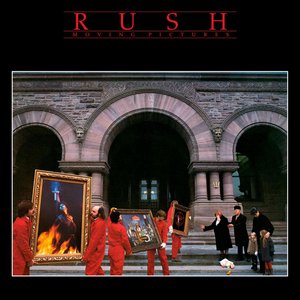
🥉 - Moving Pictures 🖼 (8.86/10)
Highlights: “YYZ”, “Tom Sawyer”, “Limelight”
Lowlights: “Witch Hunt”
Within Rush fandom there’s a constant battle for supremacy between their 1980 album Permanent Waves and this one, Moving Pictures, released only 13 months later. From a commercial standpoint, Moving Pictures is the unambiguous winner, as the band’s best-selling album of all time, currently certified at 5X Platinum in the US (to just one measly Platinum certification for Permanent Waves). These two albums, though, contain some of the most beloved Rush songs ever, and their proximity in time means that the two are comparable in sound and style. In fact I’ve always struggled to remember exactly which tracks were on which album!
I suppose Moving Pictures is most famous for “Tom Sawyer”, the only Rush song you’re almost guaranteed to have heard even if you’re not a Rush fan. To me it’s the #1 most air-drummable song ever recorded, with Phil Collins’s “In The Air Tonight” an extremely distant second. It’s a perfect-10 Rush song (I won’t hold its mainstream popularity against it). So are “Limelight” and “YYZ”, a song that my band-mates and I tried our damnedest to cover when we were in high school. Even though Rush was consciously arranging tighter, more focused compositions and eschewing the prog-epics of Hemispheres and other albums past, they were still injecting progressive elements and showcasing their musical chops regularly. The snyths had already risen from the depths of Hades and would linger for the next decade, but in 1981 they’re still just a tinge on the band’s sound. This album and Permanent Waves constitute their own distinct golden mini-era of Rush, and it’s no wonder this was their most commercially successful period.
🥈 - Permanent Waves 🌊 (9/10)
Highlights: “Freewill”, “The Spirit Of Radio”, “Natural Science”
Lowlights: “Entre Nous”, “Different Strings”
I mentioned in the biases and methodology section that I awarded two songs an 11 out of 10, thus totally cheating the system and skewing my own results. I’m not going to apologize for doing that, but I will at least say what would have happened if I hadn’t: Permanent Waves would have ended up tied for 3rd place with A Farewell To Kings, and Moving Pictures would be 2nd. I don’t think this matters very much, as both PW and MP are such good albums that I’m happy to just smash them together as the collective 2nd place finisher behind Hemispheres. They’re very similar in their composition as well, in that they both contain some absolutely perfect and iconic Rush songs alongside a couple B-sides that I don’t really enjoy all that much. Such is the nature of Rush throughout their career, really.

So, what elevates PW above MP for me? No, it’s not “The Spirit Of Radio”, an unquestionably top-tier Rush song, it’s “Freewill”. I awarded that track a Spinal Tap “11”, because I think it’s my favorite Rush song with vocals. (I decided to give out a vocals-11 after giving “La Villa Strangiato”, an instrumental, the first 11. That makes sense, right?) There are many memorable things about “Freewill”, from the tone of Geddy’s Ric to Neil’s lyrical musings about the perils of organized religion and dogmatic thinking. But it’s the instrumental section at the 3-minute mark that elevates the song above any other for me. It’s hard to put into words how utterly perfect the next minute of the song is, as three of the best rock musicians who have ever walked the earth proceed to groove, shred, fill, riff, and solo their way through the best section of music they ever put together. (Watch them rip through it like it’s nothing as 60 year-olds in Rio in 2012.) In hindsight it’s a little depressing to think that, to me, the band peaked musically in 1980 when they continued to write new music through the 2010’s, but I’m so glad to have peak-Rush.

🥇 - Hemispheres 🧠 (9.5/10)
Highlights: the whole album
Lowlights: no
Ok, so I got my answer to Michael half correct. Coming in (quite comfortably) at number 1 is 1978’s Hemispheres, probably the best album ever to feature a naked man on its cover. It’s also an album that not only has no real weaknesses but also contains one of my favorite songs by any artist - “La Villa Strangiato”. Inspired by the vivid nightmares that guitarist Alex Lifeson would have while he was on tour, the song is composed of several distinct sections and takes many twists and turns through its 9:35 runtime, including what I think is Lifeson’s best guitar solo (and one of the best of any band in the 1970’s). The song’s oft-omitted subtitle (“An Exercise In Self-Indulgence”) informs the band’s approach to composing the track, which is ambitious even by the standards of these accomplished players in 1978.
The band infamously (stubbornly?) tried to record the track in one continuous live take in studio, only to be defeated time and time again by their own creation. Apparently they attempted more than 40 takes of the song before finally giving up and assembling the track from four separate takes; all in all the band spent more time working on this one song than they did on the entirety of their Fly By Night album. They never really attempted to do anything like “La Villa Strangiato” again (“YYZ” is a worthy follow-up, but decidedly less ambitious), which is a shame given what a legendary piece of music they eventually created.
Oh, right - the album has other songs on it too. “Cygnus X-1 Book II” picks up where the first part left off and goes even harder and weirder for 18 minutes. While it doesn’t reach the heights of “2112” for 70’s epic Rush, it gets close enough to keep the song in the must-listen upper tier of this era. “Circumstances” gets (understandably) overlooked as an unassuming little 3:43 B-side, but listen to Geddy tearing up the bass all over that track and singing at the same time! And then there’s “The Trees”, a song about oak and maple trees fighting over who gets to have sunlight, inspired by the band’s pastoral surroundings in rural Wales when they were writing and recording the album. Only Rush could have written that song and made it work - it’s a beloved track despite its overt silliness, and the band played it live time and time again throughout the decades.
Reflections
This was a fun and edifying exercise, and I’m glad I spent the 15+ hours listening to every single song. (If you’re a Rush fan and a writer, why not try it yourself?) While I didn’t discover a diamond-in-the-rough album in that … unfortunate 80’s period, I did gain a deeper appreciation for what the band was trying to do across nearly 40 years of making music. I do still think that a lot of the music they made over the years is of debatable quality and value, but they also made quite a lot of music that I absolutely love, and I’ll be eternally grateful to Alex, Geddy, and Neil for that gift. 🤟
